My side project - a birding app case study
Role: UX processes, developer
Opportunity: A connection with a book writer / ornithologist
Download the app at: iOS Store or Android Play store
In this new birding app, the legendary Faansie Peacock provides a fresh, simplistic and modern approach to birding - making the wonderful world of birding accessible to all. It is not only an artistic masterpiece, but an empowering tool by providing a learning experience with regular posts/articles from the master.
It includes beautiful illustrations of all the birds of Southern Africa, making birds come alive with the bird illustrated in context/habitat. Key ID features and interesting facts are included on the illustrations.
The app includes annotated photos as well as annotated sonograms, a first for world of birding apps! Distribution maps are multi-layered, providing an in depth understanding of what birds to expect when and where. Keep track of your life-list by adding lifers on the go. Adding your photos to the app is also in the pipeline!
Faansie’s Bird App is breaking the rules of the traditional monotonous “field guide on the phone” approach to Birding apps, with this new dynamic approach. It makes birding truly alive for everyone whether beginner or expert!
The approach
It is simple: Build a birding app that will delight the full range of birders, from beginners to professionals:
- A market fit research exercise (to know we won't be wasting our time)
- A lean UX approach (hypothesis-driven)

The point I wanted the team to understand was that every idea and solution is based on the assumptions we make. We therefore need to constantly learn what the needs of our users are and be able to adapt.
Setting up the steering wheel
Because we are all working together for the first time we needed to find a transparent way to know that everyone is moving and thinking in the same direction. So my brother led an exercise to help us determine our "why".

Now we have a system where we can easily make choices on our own and keep everyone honest about where we are going. If a feature or idea is proposed that does not fit our "why" and help facilitates our "how", we can easily remove or improve it until it fits.
Hypothesis-driven thinking
We planned a user research workshop at a birding event that would happen a few weeks from then. I also knew that would be a great place to start learning about our potential clients.
To prepare ourselves, I led a hypothesis workshop. This helped us understand how we group our personas, what the user's needs are for birding and what features would address those needs. And now that we have our "why" it is easy to determine if a feature fits and how it should behave.




What I've learned about this exercise is that it prepares everyone to start thinking in a hypothesis-driven way. Later, several other ideas formed, but we didn’t need to go through this exercise to write a hypothesis. The team understood how to hypothesise together.
Creating perspective
To put things into perspective, we then organised the hypothesis into an effort and impact diagram. It didn’t take long for us to start seeing dependencies between features and discern features that could potentially forma MVP. Now we just need to validate what we've put on our board. We needed to validate what we put on our board as we needed to determine what features would deliver value and make the app feasible, making it worth the after-hours we spend on it.

User testing and validating our hypotheses
Faansie already had a stand at the birding event where he would sell his books. We came up with an idea to ask people passing by to help us build the perfect birding app. It was an interactive questionnaire to ask all the validation questions we brainstormed from the hypothesis.

How it worked: a person would select the colour sticky that he/she can most relate to a specific persona type. Then that person would stick one of the colour stickies in the appropriate boxes as the person answers the questions. One-by-one. Every person completing the questionnaire would receive a sticker of an illustrated bird from Faansie.

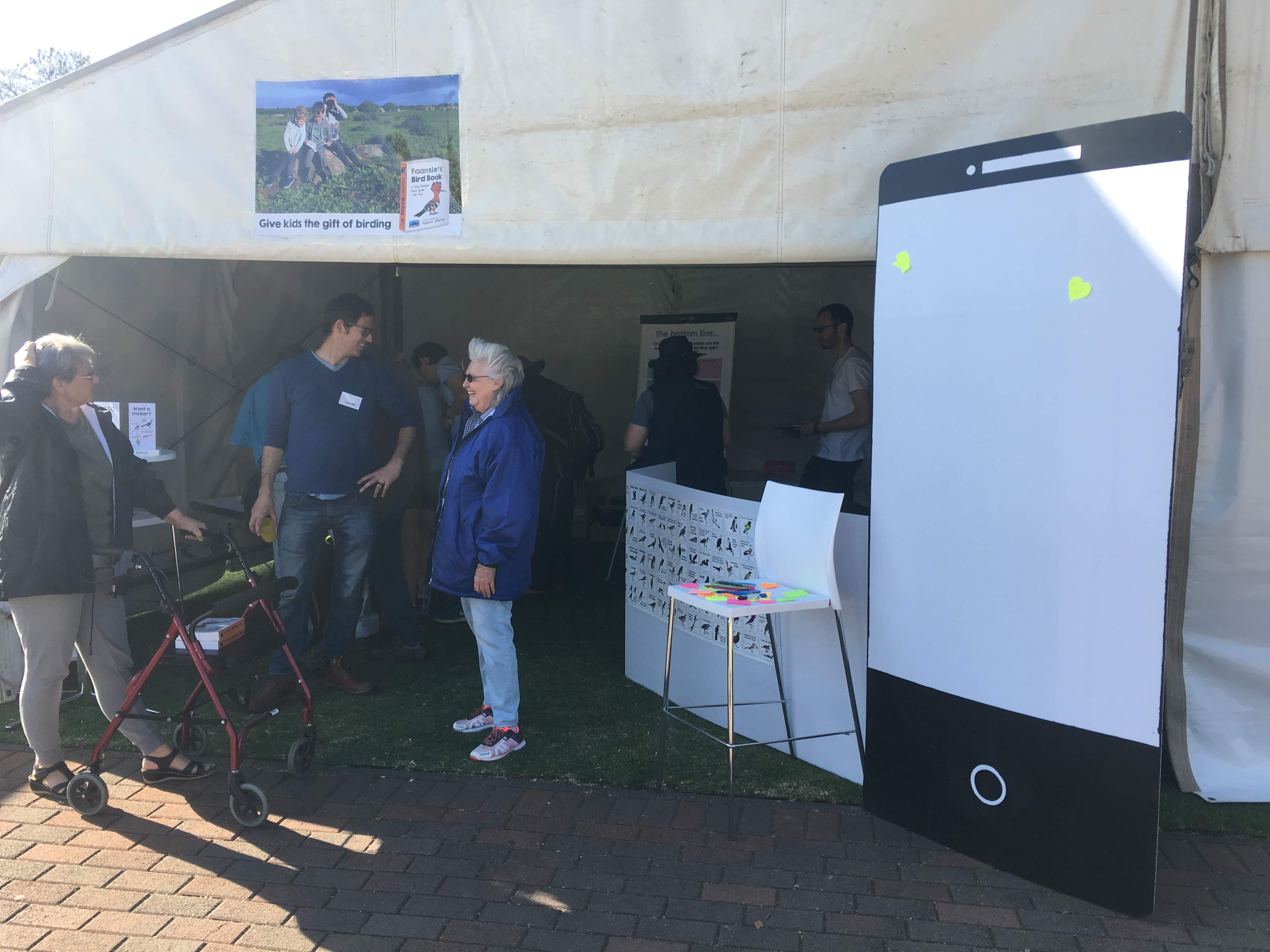
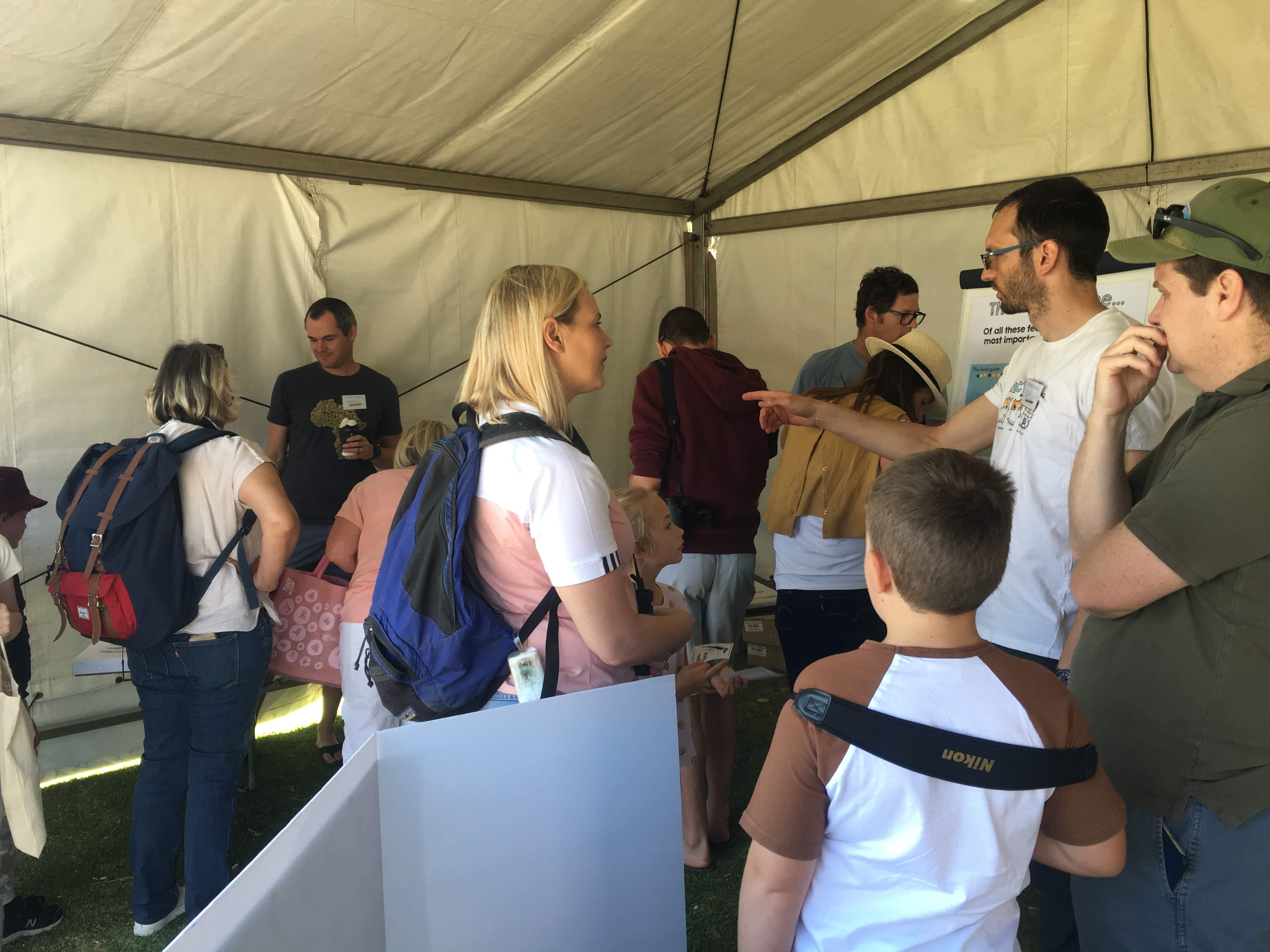
We gathered qualitative data as we asked the users why they picked certain answers. Throughout the day I made several notes on observations while walking with the birders. All these data led to other valuable insights and confirmed a few hypotheses of ours. For example 2 more personas types can be added later if we need to pivot.
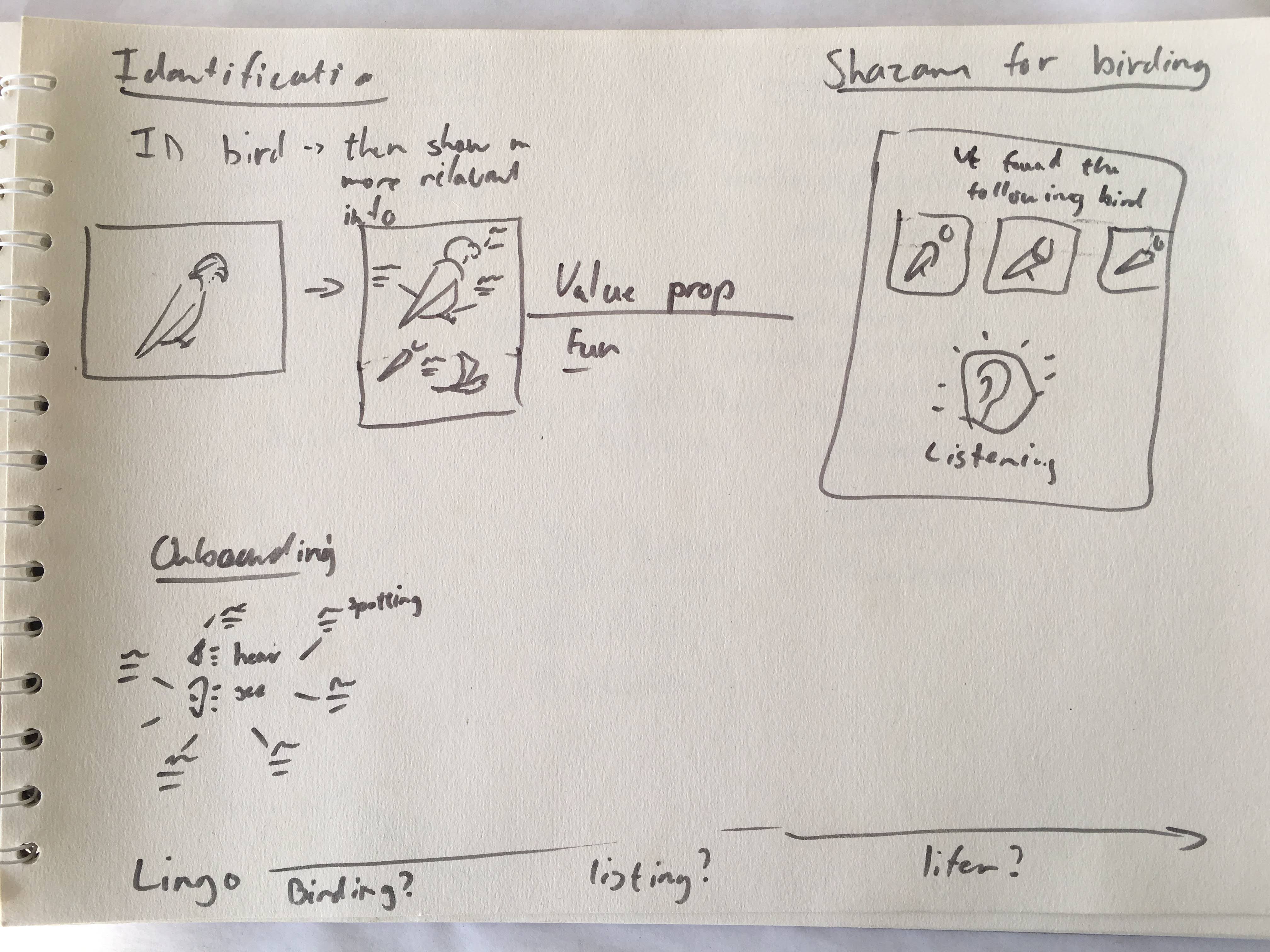
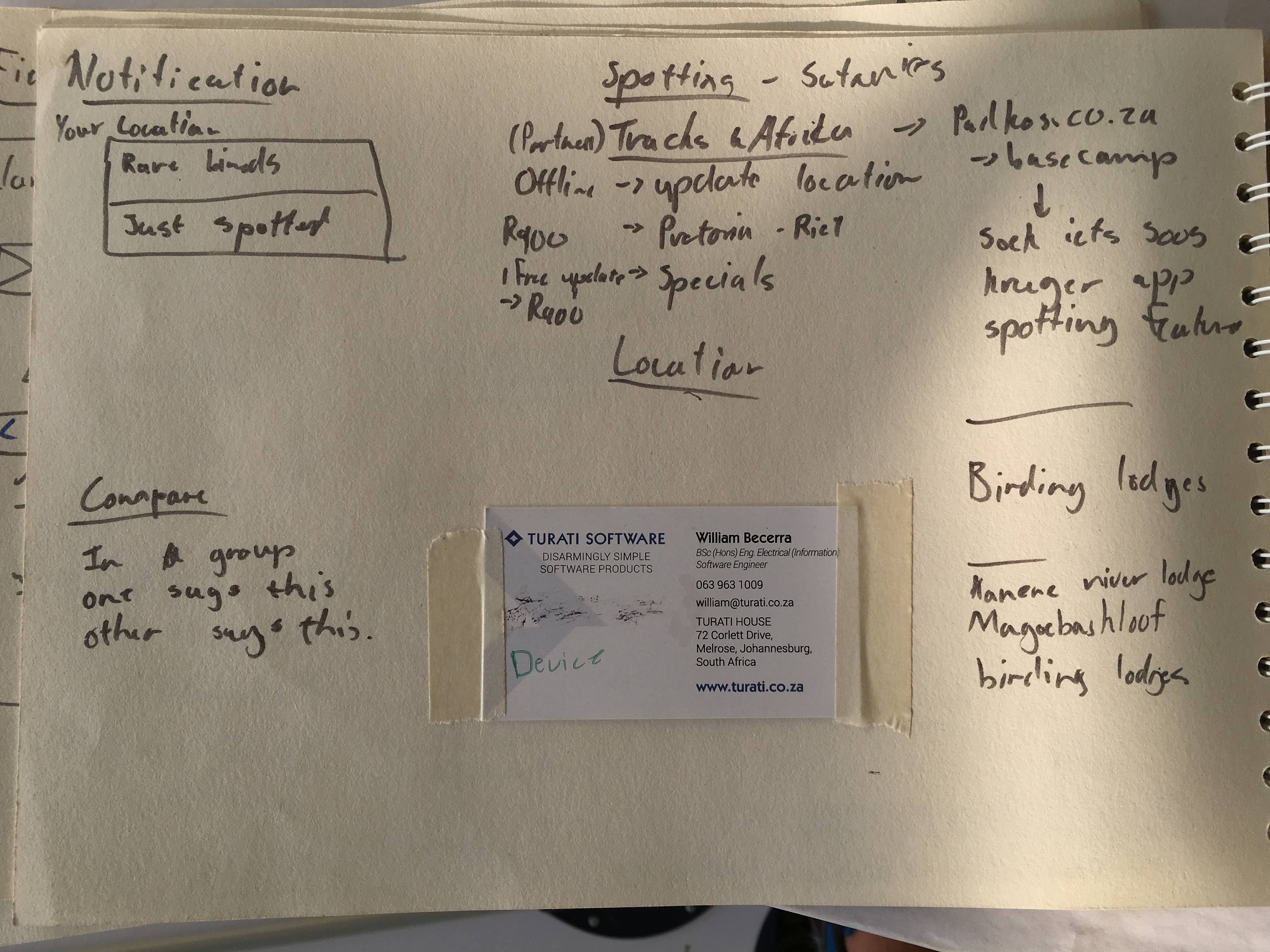
The results
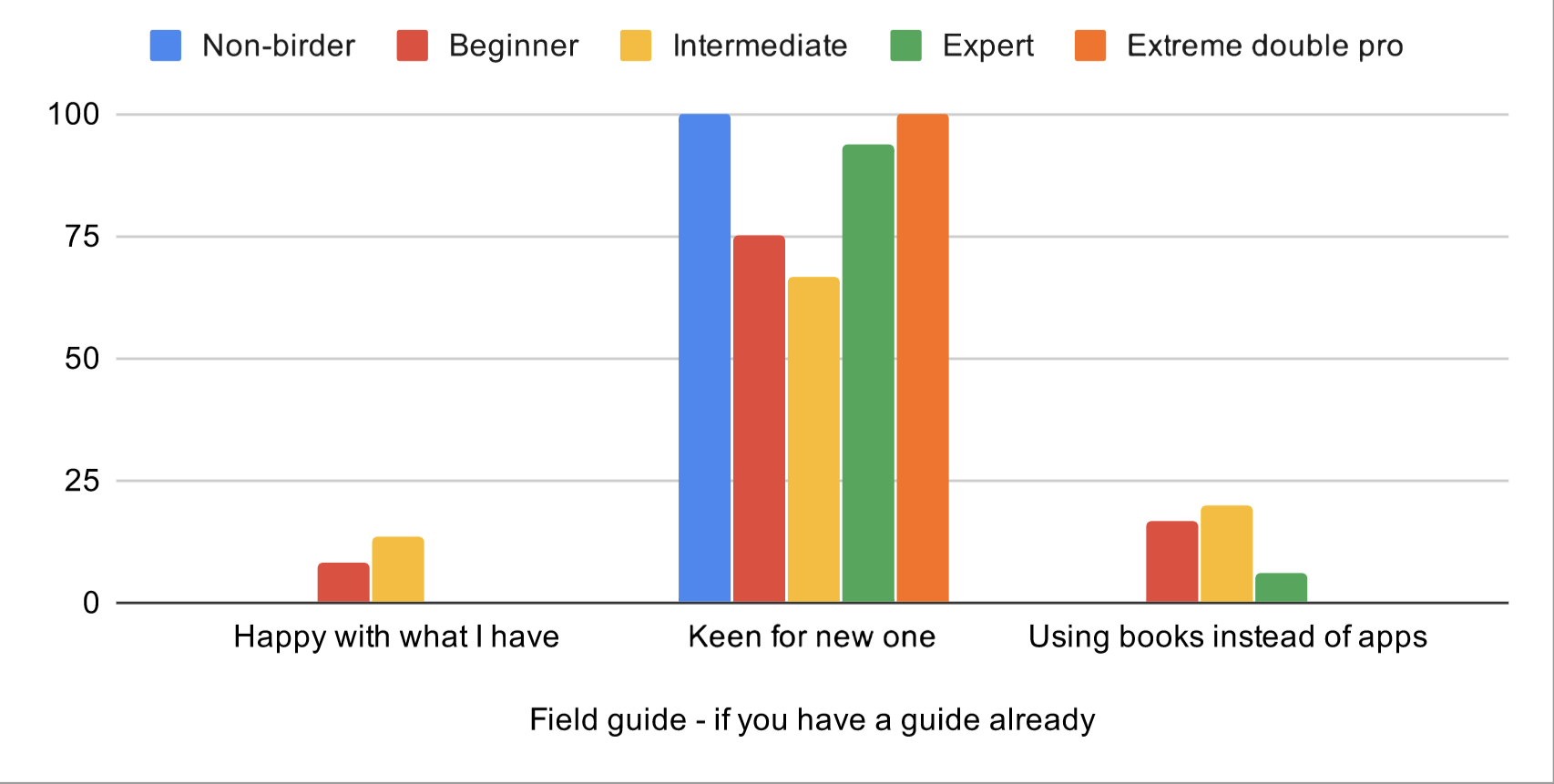
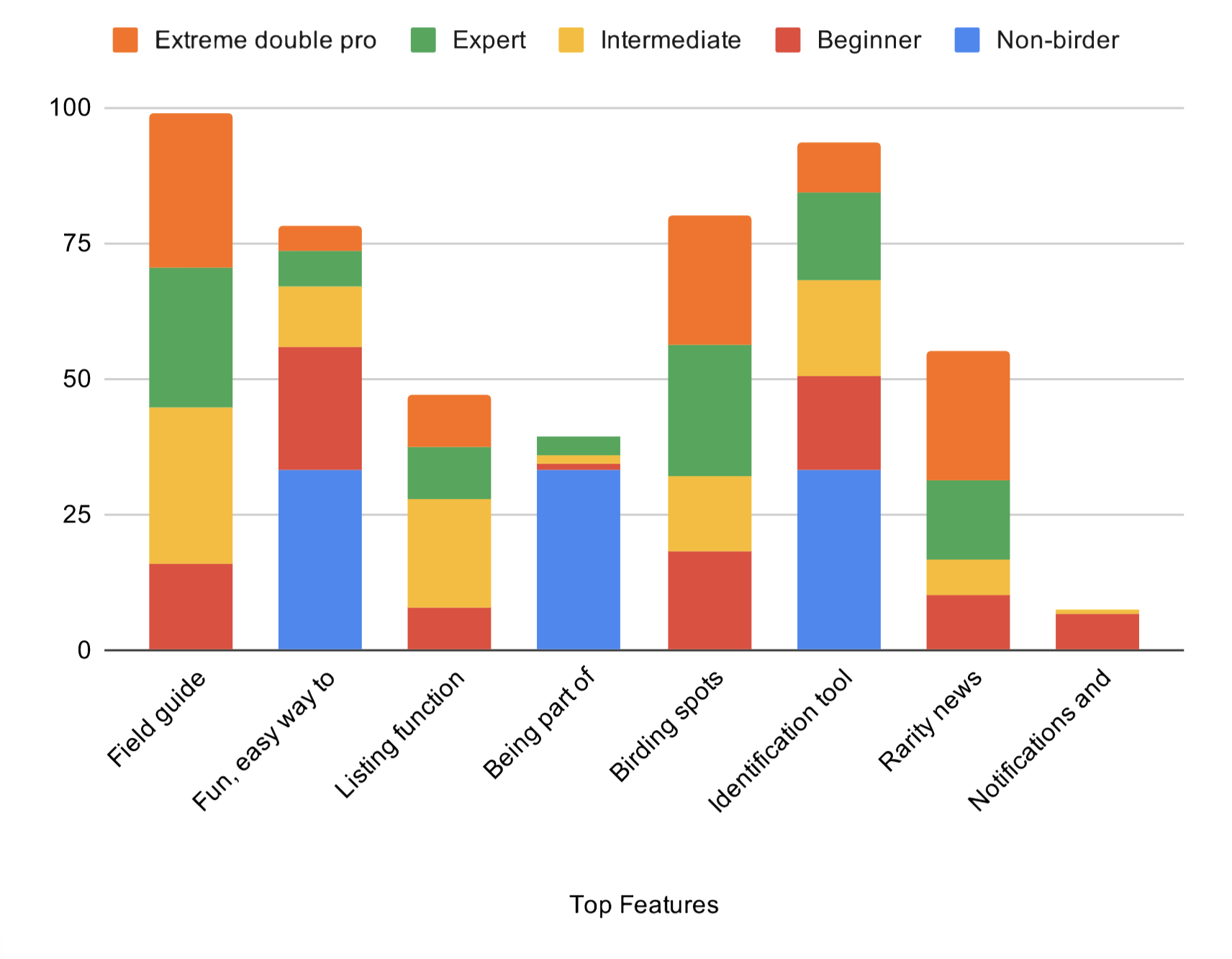
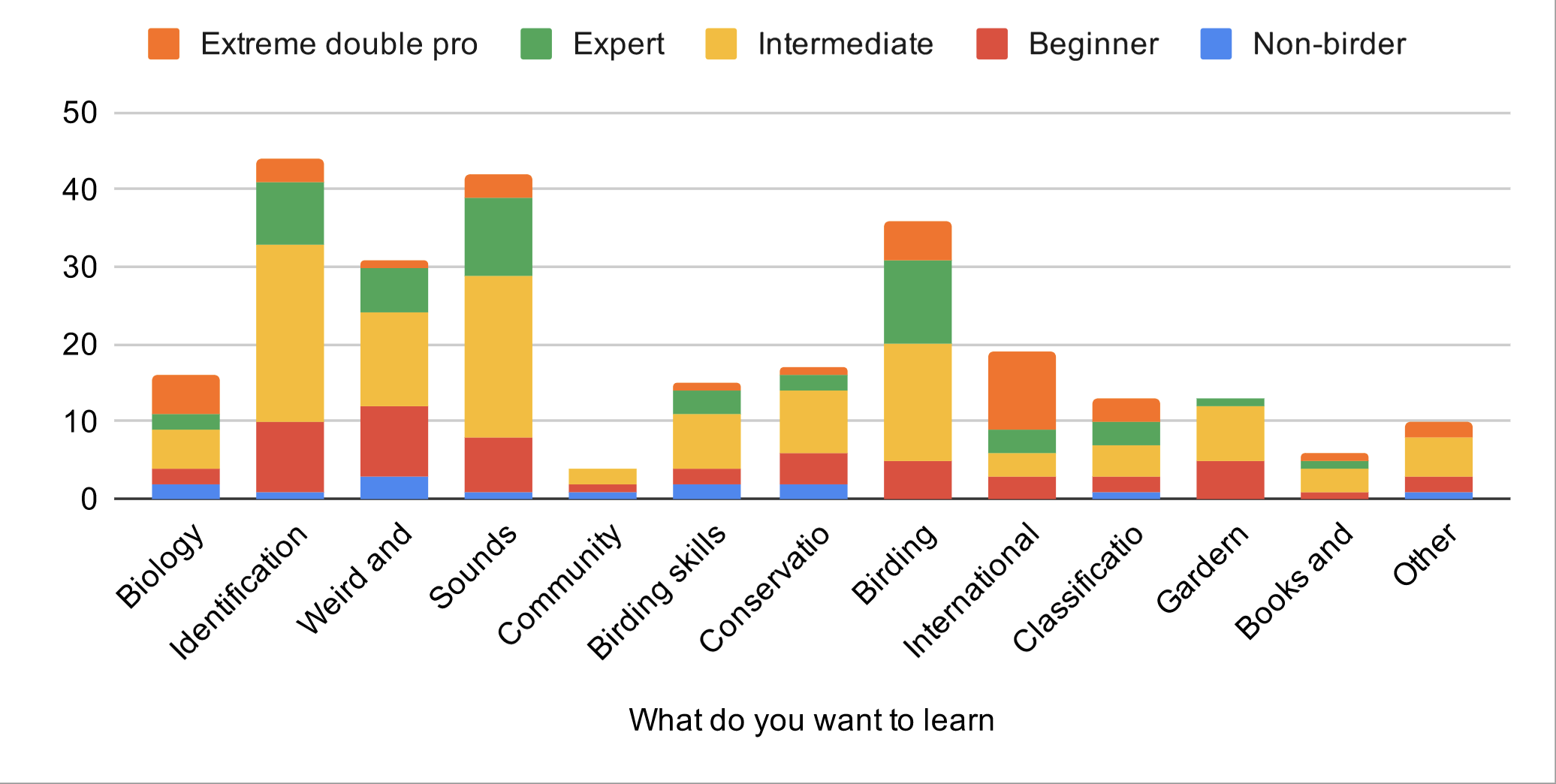
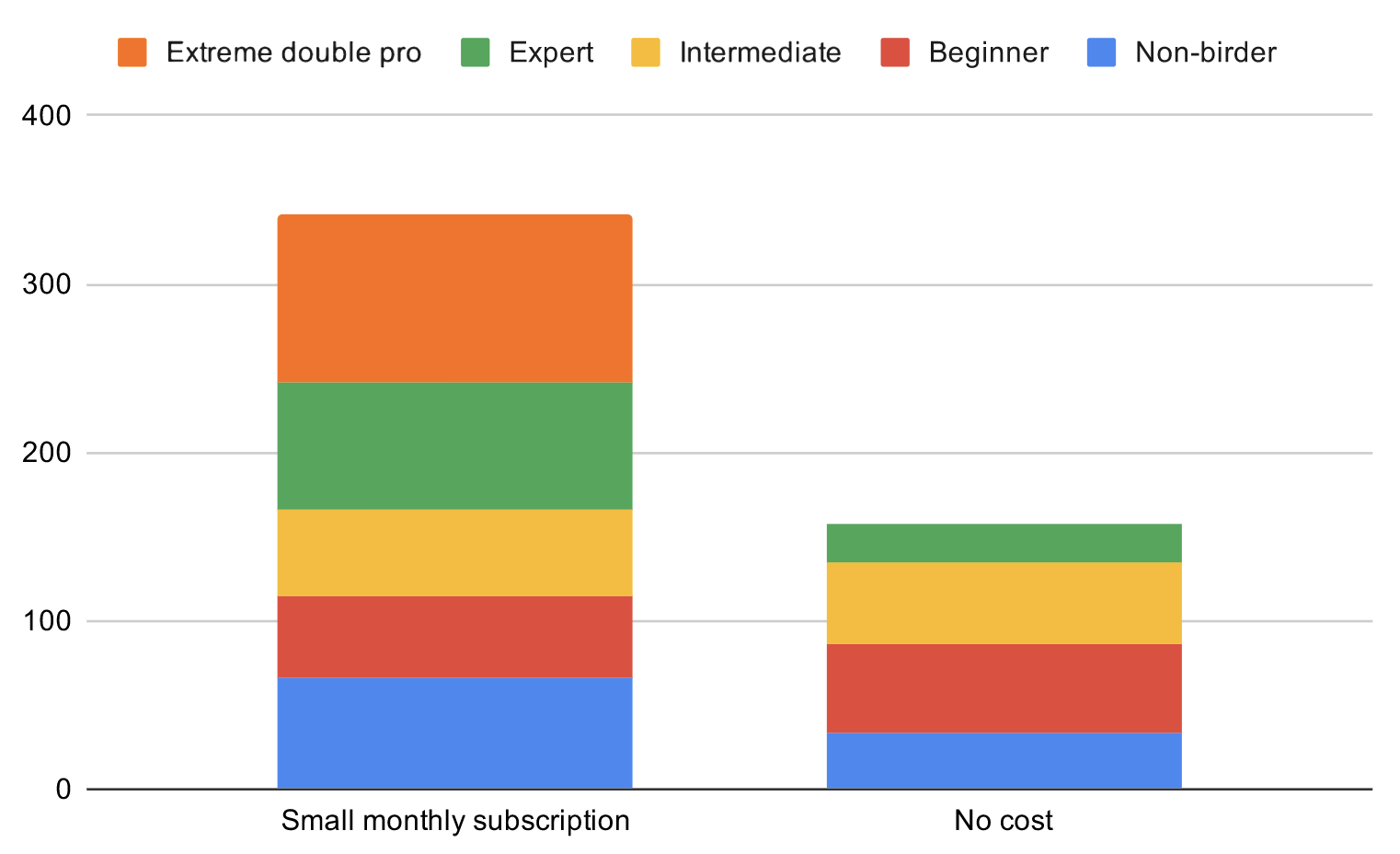
The conclusion, based on the feedback from the event was that a feature set from our hypotheses was still feasible in the birding market! This was further supported through interviews where people indicated that although there is some competition in the market, the passionate birders usually have several bird guide books and multiple popular bird guide apps. This led us to the conclusion there is a market for another app like those available. Users would buy it because it would tell them the same story, but from a different interesting angle and they would find the value in that.
Stats from the survey confirmed this in addition to how each persona would show interest:
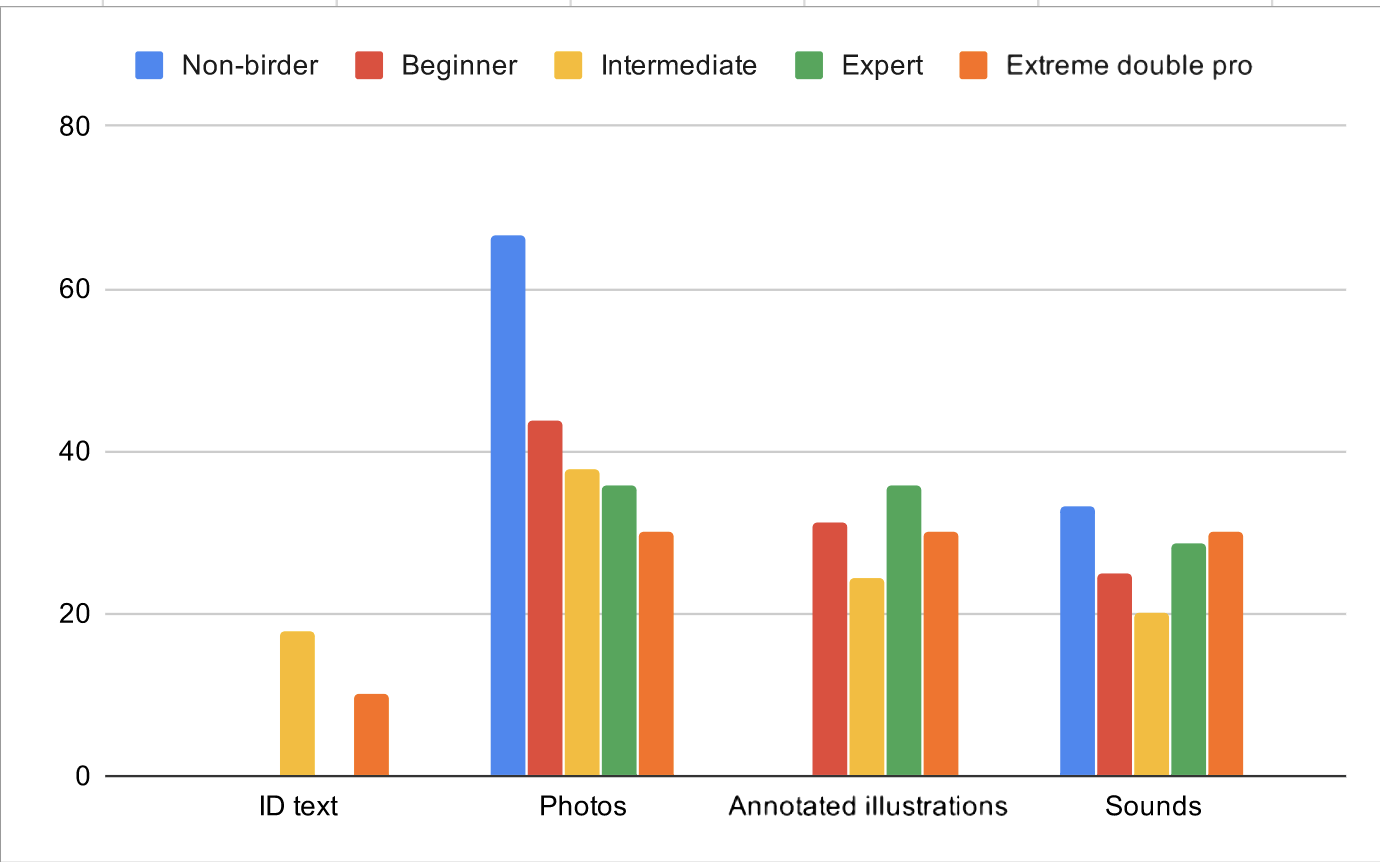
Validated hypothesis
To take it back to the earlier defined hypothesis, we received great context and learned a great deal on how and what is important of each stage of a birder (persona) and how we could enhance their birding experience.

Feature prioritisation
Now that we know what is feasible, I did a competitive analysis on the apps available that fits in our category to determine the features we will be competing against. I downloaded the apps, analysed the features and flow, and read reviews to understand what people love about each of the competitors and what improvements they were looking for.

I then mapped the research to the competitive analysis to determine the priority: what should be included in our MVP and what can we surprise and keep our users with updates. I also included additional items to each feature to indicate how we can improve what there is already.

Shared understanding
One of the main principles of lean UX is a shared understanding of the pieces of a project. From problem and context to what the outcome should look like and how the solutions were formed. One method is to do a co-design session. This is fairly easy in a startup with only four people.
Co-design sessions
We consistently meet every Wednesday evening. Then we co-design/co-think/co-everything we can. Everyone knows exactly what is going on in every screen and why we did that way. This makes work fun. When there are this openness and trust.
I designed wireframes with our team and we all tested it with friends, family, birders and whoever we could grab.

After some drawing, we quickly realised how important navigation was. To give you an idea, we have 983 bird (currently known) in South Africa. When you spot a bird you have to find your way to that specific one in less than a few seconds. Note, while writing, this problem is still real. Because to fully test if navigation works, we need all the birds (the distractions) to fully know that our navigation structure works.
Adding life to the wires
Because we would be using Faansie's brand (his brand is famous already and would make marketing a lot easier) and intellectual property, it was important for me to make the Faansie's brand visible in the app. It should feel like he created the app on his own. I started with a mood board to align the look and feel to the Faansie's current illustrations of birds.

Then I flew over to Cape Town for a weekend to co-design with him. We fleshed out most of the wires to a degree that we are quite happy with. This was an important step. It would allow me to continue on my own in some details because we created the foundation (look and feel) together. It was also important that we get the dimensions right. 983 Birds are not easy to redraw if we made a wrong decision. But it was still a bet. After that, we both knew exactly what to do (the pro of co-design).

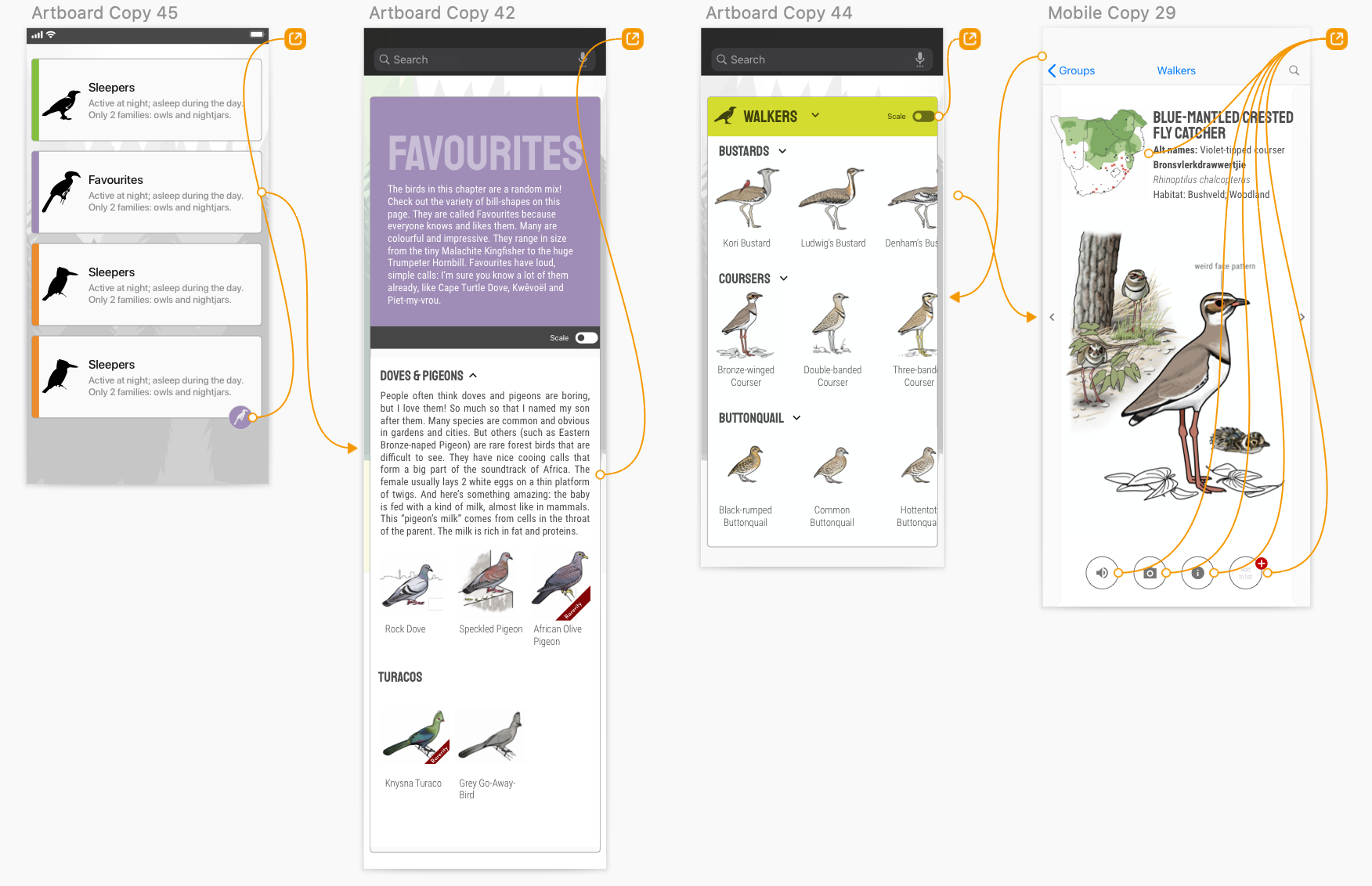


Planning
It was important for me to get this experience right. I used the RARRA business growth model to explain how important it is to put most of our focus on creating exceptional value to the new customers.

It was then easier to define our OKR's as a result. The exercise to define our OKRs was also a great tool to create a shared understanding. Everyone knew what will be developed, who will do what and how it all fits into the same goal/objective. This is something we look into weekly to see if something should change or has changed.

Feature wish list
Because we are doing it after work hours, we have a lot of time to think. And by doing that new ideas is generated almost every week. So what do you do with new ideas? I didn't want to throw them away. But I also knew that things may be relevant now but not so much sometime later. So I created a feature wish list, that was a bit easier to prioritise. I categorised the ideas according to where it would help the business growth model and still keep to the hypothesis-driven framework. The categories are retention, activation, referral, revenue and acquisition.

Development
Using the OKR's, we could plan and had clarity on what needs to be done and track the progress. Which is visible to everyone.

Choosing our tools
Because we are only 2 people who will be developing the MVP, we had to look at tools that will help us with some grunt work. Some of the important choice were:
- Supernova studio and Sketch
Supernova studio was the first tool I research a while back before we started with this project. It can export native Android (Kotlin), iOS (Swift) code and many other languages from Sketch design files. It's like a quick start on a project. It's also a great way to learn how to animate as it provides a simple interface for creating native animations. It generates that code so it's easy to tweak and modify without knowing too much about animation code.

- Firebase
Firebase eased up our log in configuration and we have a server! It provides some analytics to it as well.
- revenueCat
RevenueCat make subscription management way easier than to implement it yourself. It even has an option to A/B test offerings.
A good delay
We were luckily delayed because the content is taking a lot more time than expected. But this is ideal for development. We have rewritten Android in a new architecture that easier to maintain. We are also adding automated tests for each platform. This will help us greatly in a scenario where something needs to be updated. We can make the update, run the tests and push an update without the fear of breaking thousands of people's apps.
Launch stats
We are currently receiving about 100 active trails per month!
Conclusion
I love every second working on this project. It's like doing a holiday activity. It's because not only does everyone trusts one another, but because there is a shared believe that everyone is bringing something great to the team. So we help to bring the best out of each person.
I've experimented, tried and tested UX approaches. This project resembles my passion for product design and my growth within the field. It allowed me to grow and improve my skills as a product designer. I also have great support from my family because of the joy they see in me through this project.